


Staff Reports
1. Man who allegedly shot UnitedHealthCare CEO arrested
A 26-year-old man who reportedly shot and killed United HealthCare CEO Brian Thompson on Dec. 4 was arrested on Dec. 9.
After a five-day manhunt led by the New York Police Department, the alleged suspect, identified as Luigi Mangione, was picked up by police while eating at a McDonald’s in Altoona, Pa. He was initially charged with a gun charge before he was extradited to New York. Mangione reportedly had a 3D printed gun and multiple fake IDs on him at the time of his arrest.
The Ivy League graduate from Maryland has been charged with murder, two counts of second-degree criminal possession of a weapon, one count of second degree possession of a forged document, and one count of third-degree criminal possession of a firearm.

Thompson was shot outside of an investors’ conference in Midtown Manhattan.
Police reportedly found three bullets at the scene of the shooting. Each bullet reportedly had a word written on it — “delay,” “deny,” and “depose.” Law enforcement officials said they are looking into whether or not the words relate to a possible motive involving insurance companies and their responses to claims.
2. Biden gives farewell economic address
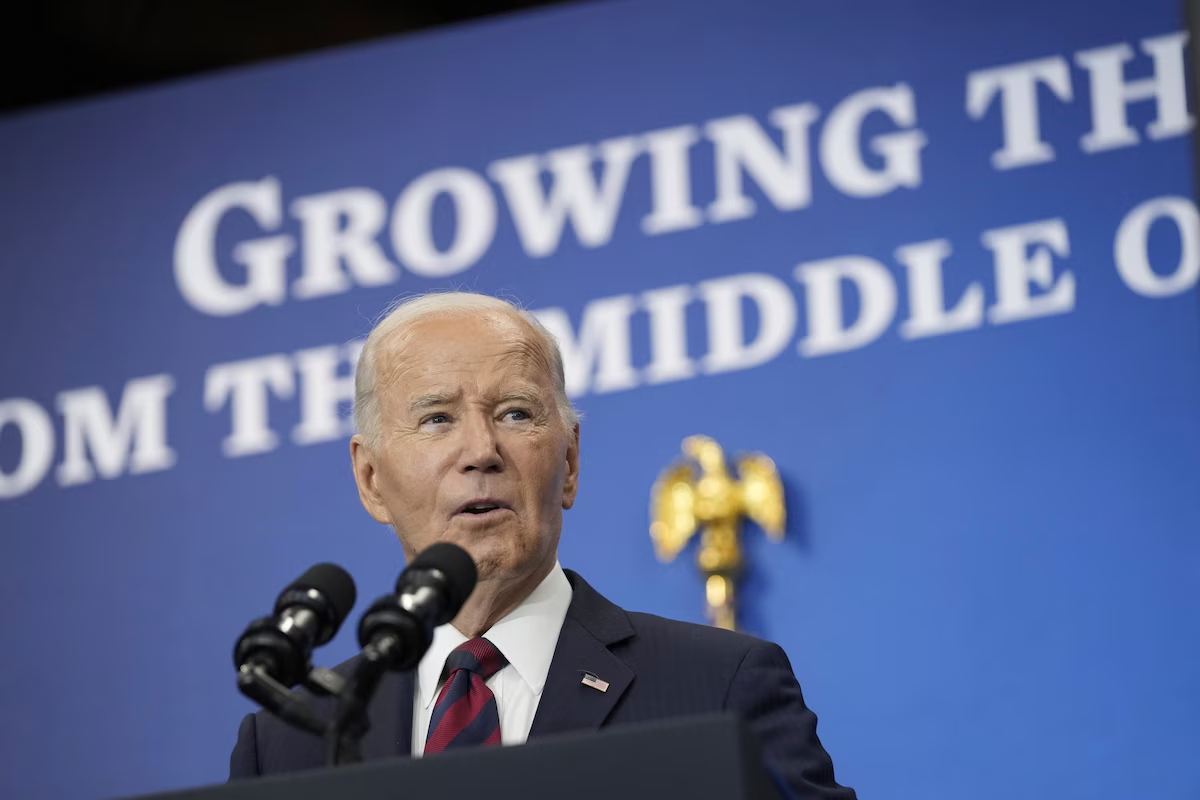
President Joe Biden laid out a summary of his economic record in a public address Dec. 10.
Biden traced the arc of his presidency from dealing with the effects of COVID-19 and the Russian invasion of Ukraine through the surge of inflation that followed both — while warning that a return to the “trickle down” politics of tax cuts and deregulation would undo much of the progress he believes his administration delivered.
“I came to office with a different vision for America,” Biden said. “One based on the idea of rebuilding the middle class and strengthening the economy from the bottom up.”
He compared his efforts with President-elect Donald Trump’s, who has pledged more tax cuts, higher tariffs on imported goods and named a list of Cabinet and other appointments stock full of billionaires.
Biden finished his address by asking the American people one question.
“Where will inflation be at the end of the next president’s term?”
3. Israel strikes, advances into Syrian territory
Syrian President Bashar al-Assad fled his country Dec. 9 after a 13-year-long civil war.
The Assad family dynasty came to power in 1971.
Assad clung to power through domestic oppression, torture and murder, eventually suppressing a 2011 uprising with a mix of chemical weapons and deadly backing from Russia and Iran.
Seeing an opportunity, Israel began a sweeping aerial campaign on its neighbor.
By Dec. 10, at least 350 airstrikes had leveled military assets across Syria, taking out the Navy, fighter jets, drones, tanks, air-defense systems, weapons plants and a wide array of missiles and rockets, according to the Israeli military.

Israeli officials said they were destroying weapons and military facilities to keep them out of the hands of Islamist extremists. The rebel group that led the toppling of Assad was formerly linked to Al Qaeda and is still designated as a terrorist group by the U.S. and the United Nations.
But the intense air assault on Syria at such a fragile moment raised alarm among some in the international community.
“This needs to stop,” the U.N. special envoy for Syria, Geir Pedersen, told reporters in Geneva on Dec. 10. As Syrian factions attempt an orderly transition to a new government, it is “extremely important that we don’t see any action from any international actor that destroys the possibility for this transformation in Syria to take place,” he added.
4. Southern California fire grows to over 3,000 acres in Malibu
A brush fire that broke out the evening of Dec. 9 in Malibu Canyon has led to mandatory evacuation orders in parts of Southern California, authorities said.
The Franklin Fire began approximately three miles north of the Pacific Coastal Highway in Malibu and has spread to over 3,000 acres with 0% containment as of Dec. 10.
About 1,500 firefighters have been deployed to battle the blaze, facing difficult terrain and dangerous Santa Ana wind conditions in the area, which were expected to remain a threat through the morning of Dec. 11.
During a Dec. 10 press conference, officials said seven structures were destroyed and eight others were damaged in the blaze.
About 20,000 people were under evacuation orders and warnings. A large swath of the nearby area is without electricity, cell or internet service.
5. Monarch butterflies to be listed as a threatened species
U.S. wildlife officials announced a decision Dec. 10 to extend federal protections to monarch butterflies after years of warnings from environmentalists that populations are shrinking and the beloved pollinator may not survive climate change.
The U.S. Fish and Wildlife Service plans to add the butterfly to the threatened species list by the end of 2025 following an extensive public comment period.
“The iconic monarch butterfly is cherished across North America, captivating children and adults throughout its fascinating life cycle,” U.S. Fish and Wildlife Service Director Martha Williams said in a news release. “Despite its fragility, it is remarkably resilient, like many things in nature when we just give them a chance.”